文章信息 | Long-term capsaicin intake and gut inflammation: microbial alterations, metabolic mechanisms, and intervention effects, Food Research International, 2026. | 作者 | Liangliang Zhu, Yijia Chen, Jiayang Jin, Mengyao Zhao, Jingfang Ran, Hao Yin, Xiaoguo Ji*, Liming Zhao* | 摘要 | The effects of capsaicin consumption on gut health and its mechanisms remain uncharacterized. This study integrated human cohort and colonic simulation fermentation found that long-term capsaicin intake induced gut dysbiosis, characterized by an increase in Klebsiella and a decrease in Lactobacillus, which correlated significantly with gut inflammation and the dysregulation of key metabolites (including bile acids, short-chain fatty acids derivatives and steroids). Capsaicin metabolites, such as dihydrocapsaicin, ferulic acid, and veratric acid were identified. The study also enriched and identified capsaicin-utilizing gut microbes, with Escherichia and Klebsiella being predominant. Through genomic homology analysis, machine learning prediction, and molecular docking simulations, vanillate decarboxylase homologous protein potentially involved in capsaicin metabolism was identified in strains including Escherichia coli, Klebsiella aerogenes, and Enterococcus faecalis and its expression was positively correlated with capsaicin metabolic efficiency. In cell and human microbiota-associated animals, Lactobacillus plantarum and Enterococcus faecalis significantly alleviated capsaicin-induced gut inflammation and repaired the intestinal barrier function by directly degrading capsaicin. This research elucidated the mechanism by which long-term capsaicin altered gut microbiota and its metabolites to induce inflammation, providing a foundation for managing gut health of individuals with chili habit. | 摘要图 | 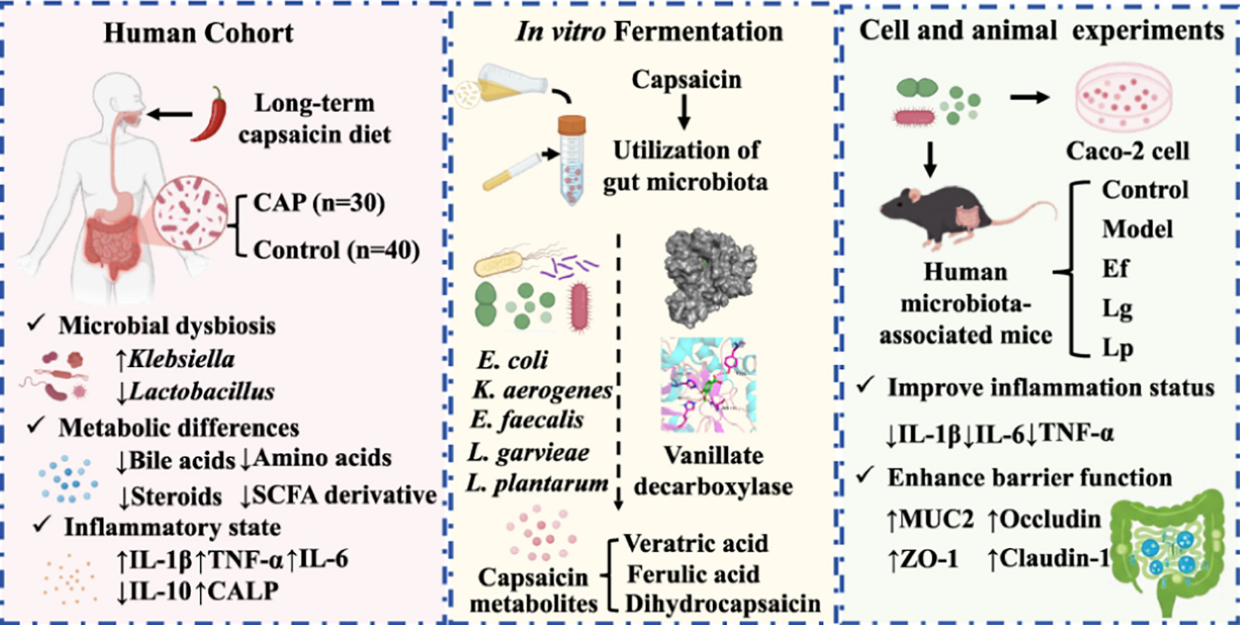
| 文章主页 | https://doi.org/10.1016/j.foodres.2026.118796 |
|