文章信息 | Microbiota-Targeted Chitooligosaccharides Intervention Restores Glucose Homeostasis after Islet Cell Transplantation in Rapamycin-Treated Mice, Food Science & Nutrition, 2026. | 作者 | Kunlin Chang, Duowen He, Junfeng Dong, Yayu Zhang, Shuxin Deng, Mengyao Zhao, Jiayang Jin, Xiaoguo Ji*, Hao Yin*, Liming Zhao*. | 摘要 | Islet cell transplantation (ICT) is an effective treatment for diabetes mellitus, but postoperative islet function recovery and inflammation are closely linked to immunosuppressants. Using multi-omics and fecal microbiota transplantation (FMT) in human microbiota-associated (HMA) mice, this study explored rapamycin-induced gut dysbiosis and its impacts on islet function and inflammation post-ICT. ICT significantly altered the gut microbiota of type 2 diabetes mellitus (T2DM) patients, and FMT from these patients to antibiotic-treated mice recapitulated metabolic disorders in the mice. These disorders included hyperglycemia, hepatic and pancreatic injury, and impaired intestinal barrier. Rapamycin decreased beneficial bacteria (Akkermansia, Faecalibacterium) and enriched Desulfovibrio in HMA-T2DM mice. Targeted microbial modulation by chitooligosaccharides (COS) ameliorated rapamycin-induced deficits in insulin and C-peptide secretion, as well as elevated glycated hemoglobin levels. COS also significantly reduced serum inflammatory markers IP-10 and MCP-1, while upregulating colonic barrier proteins (MUC2, Occludin) in HMA-T2DM-ICT mice. COS additionally mitigated postoperative hyperglycemia via the PI3K/AKT/GSK3β/FOXO1 signaling pathway. This study identified COS as a microbiota-targeted adjunctive strategy to improve metabolic recovery and islet function under post-transplant immunosuppression. | 摘要图 | 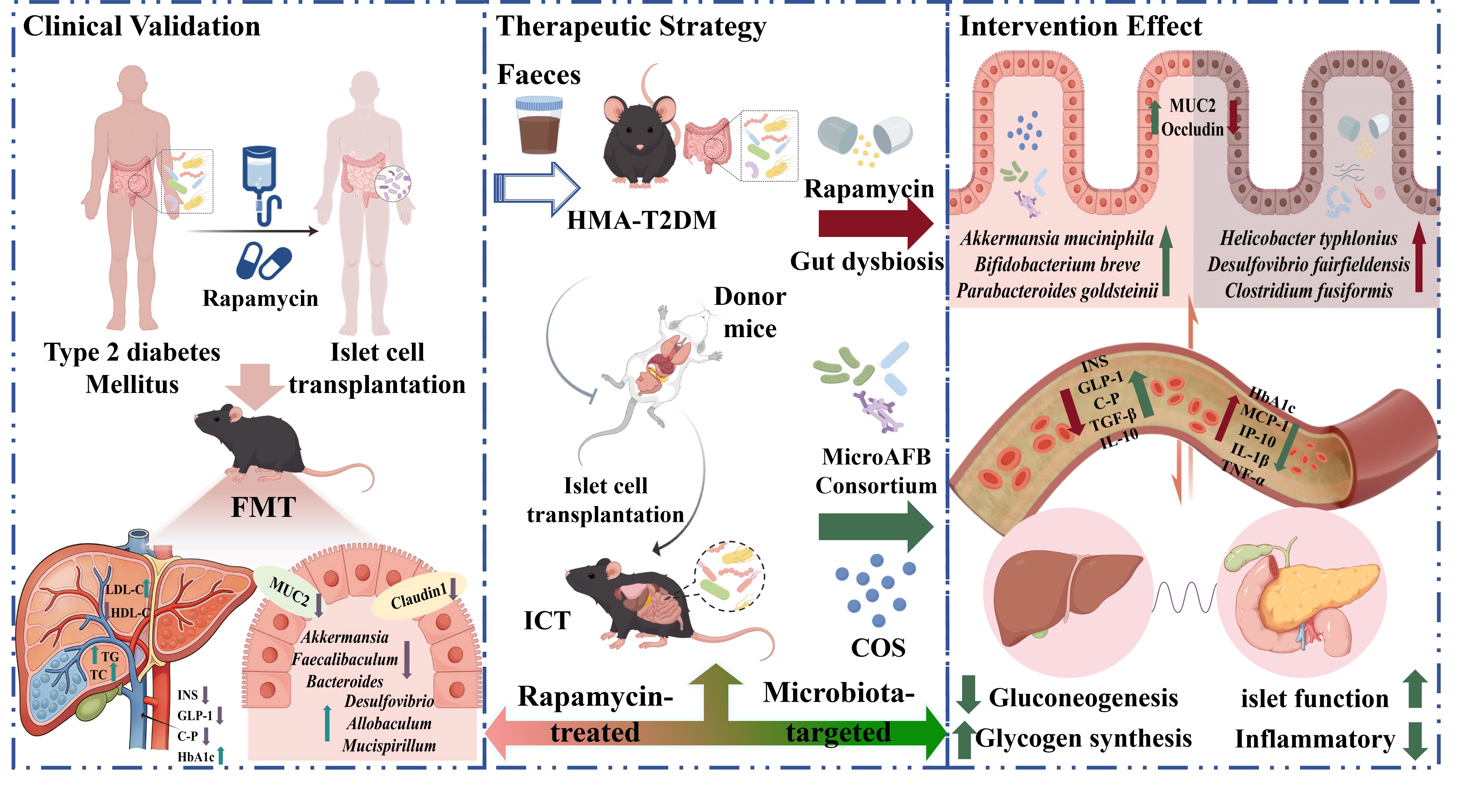
| 文章主页 |
|
|