文章信息 | Multi-dimensional metabolic engineering and enzyme engineering in Escherichia coli for highly efficient biosynthesis of 2,5-furandicarboxylic acid, Bioresource Technology, 2026. | 作者 | Yanan Cui, Peiyi Zhang, Renjie Miao, Mengqi Zhao, Liqiang Fan, Xu Li, Yongjun Qiu, Chen Deng*, Liming Zhao* | 摘要 | 2,5-Furandicarboxylic acid (FDCA) is a key monomer widely used in the plastic, dye, pharmaceutical, pesticide and resin industries. Presently, its biosynthesis via microbial fermentation is severely limited by the cytotoxicity of substrate 5-hydroxymethylfurfural (HMF). In this study, using Escherichia coli as a host, efficient biosynthesis of FDCA was achieved through multi-step metabolic engineering and protein engineering. The novel oxidative pathway for converting HMF to FDCA was constructed and optimized by screening candidate genes and optimizing gene combination, linkage strategies, copy number, and translation intensity. Subsequently, a comprehensive deep mutation screening of aldehyde dehydrogenase EcALDH was performed using the VenusFactory platform, and the mechanisms were elucidated through kinetic analysis and molecular dynamics (MD) simulations. The H263A mutant increased the catalytic efficiency toward the key intermediates 5-hydroxymethyl-2-furancarboxylic acid (HMFCA) and 5-formyl-2-furancarboxylic acid (FFCA) by 828.4% and 340.3%, respectively. Further, FDCA production was enhanced by increasing the availability of the cofactors nicotinamide adenine dinucleotide (NAD+) and flavin adenine dinucleotide (FAD), while reducing extracellular leakage of the intermediate HMFCA. Transcriptomic analysis identified 26 significantly upregulated candidate genes potentially associated with HMFCA transport. Notably, inactivation of aromatic amino acid transporter (AroP) increased the FDCA concentration to 77.73 mM. Finally, fed-batch fermentation in a 5-L bioreactor produced 170.72 mM(26.65 g/L) FDCA with a molar yield of 94.8% relative to HMF added. These results demonstrate that the engineered E. coli strain constructed in this study can serve as a promising platform for efficient and sustainable production of FDCA, laying a solid foundation for industrial biomanufacturing. | 摘要图 | 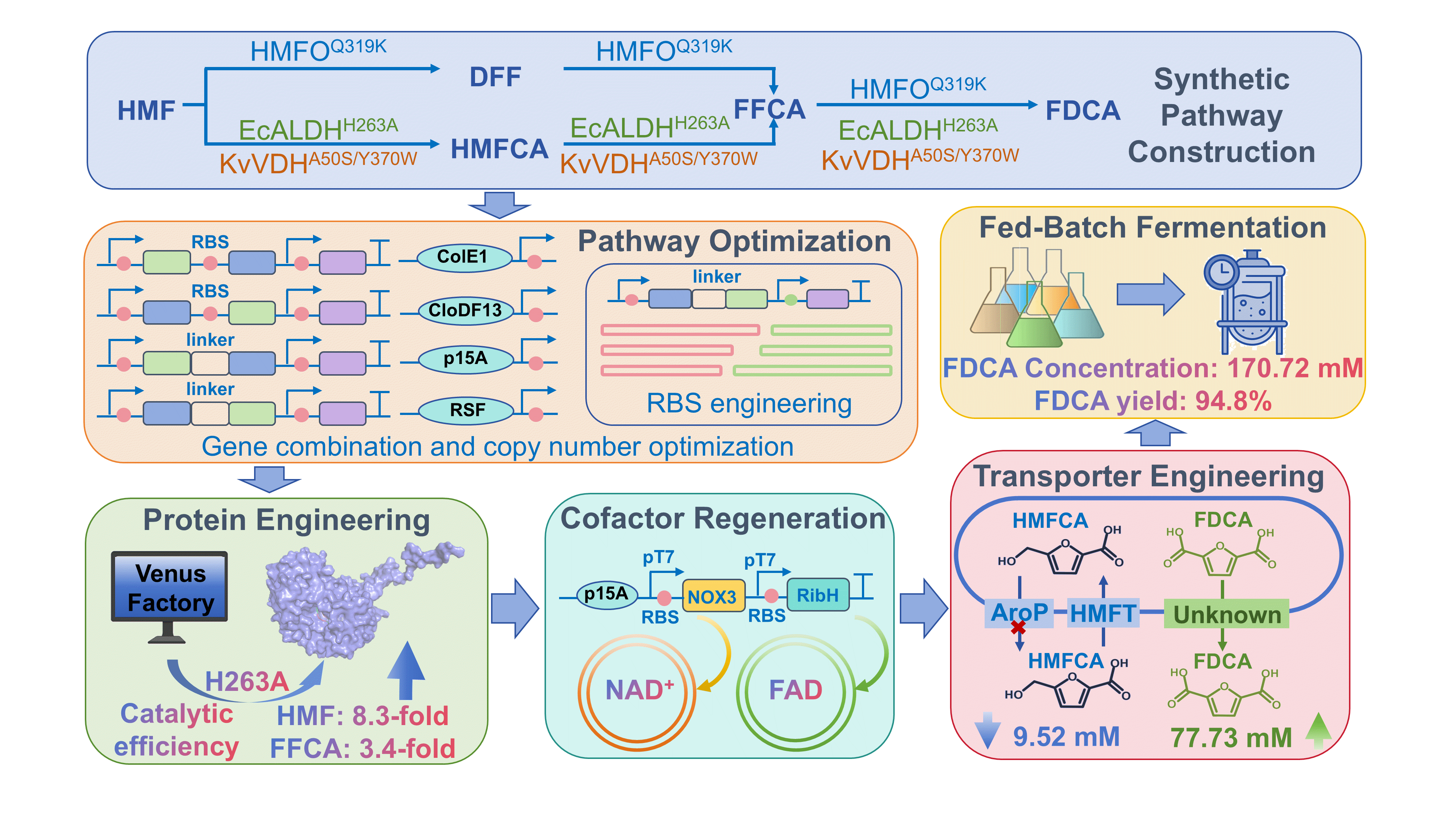
| 文章主页 |
|
|